Software Engineering in Web Development, Backend Services, and More

Tag: WordPress (Page 73 of 220)

Articles, tips, and resources for WordPress-based development.

A Look Towards 2017 (Starting with 2016)

With this being the last post of the year (and I look towards 2017), it’s easy to want to fall into the standard retrospective post. And there will be some of that.

Initially, I planned to keep this relatively short, but that didn’t work out. But I tried to make it as much of a quick read as possible. That is, everything is in a bulleted list.

Towards 2017: Not that kind of bullet.

No, not that kind of bullet. (I’ve been playing too much Super Mario Run!)

Here’s what I’m going to cover:

  1. There are a few things I want to mention regarding the past year. Nothing too deep or analytical, but just some of the highlights.
  2. There are plans for 2017 that I’d like to share that may or may not be of interest to you that I’m going to share.
  3. I have a few future endeavors around writing (on a different platform, no less!) that I will share.

Now that you know, you can decide whether or not you want to read more or not. So here goes.
Continue reading

WordPress Messages via Custom Code

WordPress messages, especially custom messages, are becoming a bit of a sore spot for developers, bloggers, content managers and so on.

And with good reason: It seems like every plugin has this desire to display tooltips, messages, promotional content, and so on every single time it’s activated or updated.

WordPress Messages aren’t inherently bad, but they’re abused. Still, they serve a purpose and can (and arguably should) be used sparingly when the opportunity presents itself.

In a series I’ve been working on for Tuts+, I’ve been walking through the process of creating a custom system for implementing, displaying, and customizing WordPress messages.

And how to do so in a way that’s reusable across various projects.

Continue reading

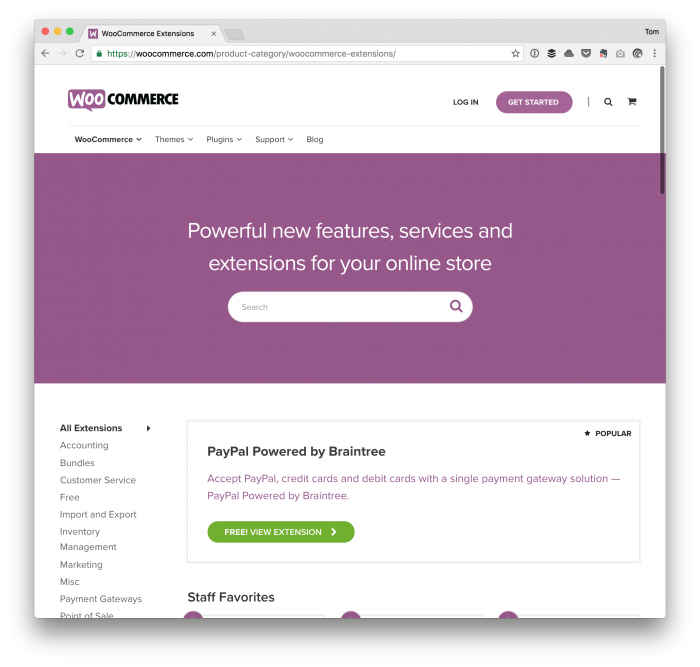
Control Activation of a WooCommerce Extension

When creating a WooCommerce extension, it’s important to consider that when the extension is activated, the user may not have WooCommerce installed or active.

And though an extension might activate, it won’t do anything. This can ultimately provide a level of confusion for the user.

WooCommerce Extension

In cases like this, I think it’s important to make sure an extension can only be activated if the core plugin is installed and active.

Continue reading

PHP Autoloading: Object-Oriented Programming

PHP autoloading is a topic that, once you’ve begun to employ it in your projects, is hard to avoid doing so in any project moving forward.

The challenge with learning how to do it, though, is learning aspects of object-oriented programming and what facilities the PHP standard library has to offer. On top of that, there are other advanced tools like Composer that make it possible, as well.

You have to walk before you can run, as they say, so in a recent series on Tuts+, I walk through how to perform PHP autoloading using object-oriented programming in the context of WordPress.

Continue reading

WordPress Payments: Plasso, Array, EDD, or What?

Years ago, I started using this little service called Spacebox (and I briefly mentioned it about three years ago) to accept one-off payments from clients, family, and friends for different things.

Not long after that, Spacebox changed its name to Plasso, expanded its offering regarding what could be done with it, and I continued to use it for one-off payments.

Fast-forward to yesterday and the company comes out of the gate swinging with some different products for WordPress payments. These include a couple of themes, a plugin, and so on.

And I’m pretty stoked to see what all it has to offer especially with dealing with accepting self-hosted payments (well, as far as accepting things within the context of WordPress).

Continue reading

« Older posts Newer posts »

© 2026 Tom McFarlin

Theme by Anders NorenUp ↑