Software Engineering in Web Development, Backend Services, and More

Tag: WordPress (Page 43 of 220)

Articles, tips, and resources for WordPress-based development.

Properly Working with Ajax Requests in WordPress

Whenever you’re working with third-party APIs, and you’re doing so in an asynchronous nature, there is always the chance that whatever it is you’re requesting is going to return a un-desirable result.

Perhaps it’s an error code, perhaps it’s a warning, or maybe it’s a simple message saying something like “We’re still processing your request on our end.”

In each case, you can usually handle them on the server-side just fine and let the client-side know how to handle it. But if you’re dealing with the latter case, that is where you’re blocked by the third-party processing; there are other things you can do to handle this situation better.

For example, in the latter case, it’s better to wait for a little bit then make the request again to see if the API has a different response for you.

But when doing this, it requires Ajax which obviously requires JavaScript. One of the obvious, yet more dated methods of doing this is to use setInterval.

The problem with this, though, is that it creates a stack of requests and then, as the response is ready, each item in the stack will get the same response.

This can drastically impact any given server. And there are better ways to go about doing this.
Continue reading

An IDE for WordPress Development (Regardless of Experience)

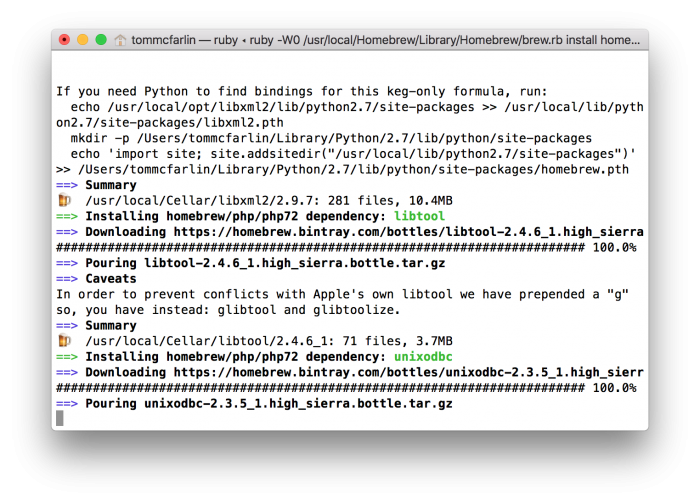
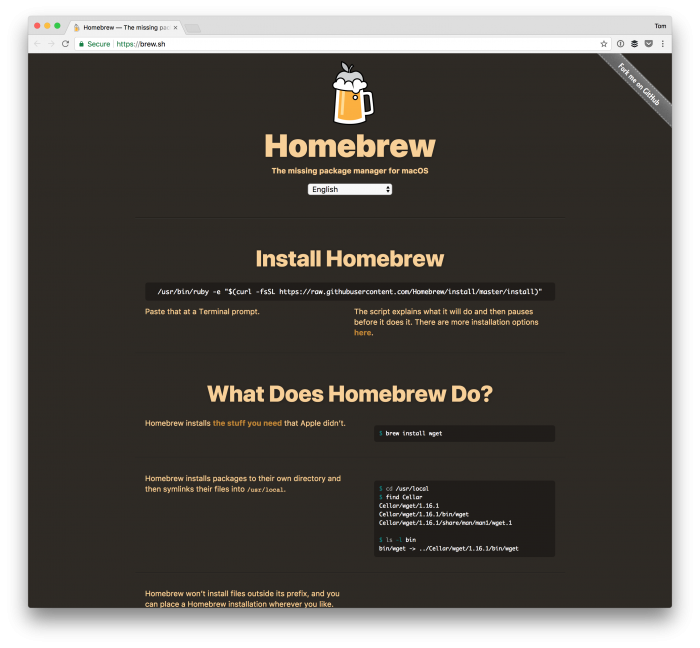
In the previous article, I walked through the process of setting up a local development environment using a package manager. Specifically, I talked about using Homebrew to install Valet and Composer.

The former offers the Nginx web server, a MySQL database server, while Homebrew allows you to install PHP. Composer gives you the ability to deal with PHP dependencies. If you’ve not read the post, I highly recommend it as this post is predicated on that entire environment.

Specifically, I’m going to be talking about IDEs. It’s a hot topic, I guess, but if you don’t have a preference then I’m going to walk you through the process of picking one that I think is best (at lest to start with), configuring it, and using it in the context of the environment established last week.

Continue reading

Modify Image Containers on the Server-Side in WordPress

Whenever you’re building custom solutions for other people, you may find yourself having to deal with nuanced cases of how WordPress is rendering the content.

This usually comes down to the theme, at least one plugin, or the combination of both. And if you need to work with images individually, then it can be a bit of a challenge. The problem with even trying to write a post like this is that it’s hard even to describe a situation in which you may need something like this.

Even still, I’m going to do the best I can. That is, I want to share how to modify image containers on the server-side before rendering them on the client-side and do so using PHP’s DOMDocument library.

Sound like a lot? Hopefully, I can break this down easily enough.

Continue reading

A WordPress Development Environment (Using a Package Manager)

At this point, I’ve written about as much of the OOP Fundamentals that I believe are necessary to begin looking at more in-depth topics (such as design patterns and how to apply these topics in WordPress development).

But when planning the content, I kept coming back to a few other things that I think are also necessary to cover eventually. These are things such as Composer, Yarn, build tools, and so on.

Above that, though, I kept asking myself:

If I’m going to be writing about this material at length, should I assume we’re all using the same environment?

And that’s a tough question to answer because some of the people reading this have been writing code for quite some time. That is, they (or you) have your tools, your setup, and how you like to organize your projects.

On the other hand, there are those (or you), who are looking for a different way or looking to start from the ground-up. And to that end, I think it’s important to cover two things:

  1. How to Setup a Local Development Environment
  2. What IDE, Add-Ons, and Tools are going to be used

For some, it’s not the most exciting topics and it’s certainly putting a pause on the more advanced aspect of object-oriented programming. Since those of you who pay to read this material have access to the comments, I have to assume that – at some point – comments will come through asking about how to achieve certain things.

And to that end, I’m going to assume that we’re all working off of the same playing field. If not, there’s only so much that I can do to provide help beyond actual programming questions.

So before going any further into the depths of object-oriented programming, I’m going to spend a few posts covering the above topics in detail to make sure that we’re all on the same page.

If you’re comfortable with your tools and your setup, then please bear with me. If you’re looking for a definitive way to setup your environment, then the following posts are for you.

And with all of that said, let’s get started with talking about how to cleanly set up a local development environment that’s easy to maintain.

[restrict paid=”true”]

Continue reading

Templating and Conditional Logic with OOP in WordPress

Templating is becoming more common in WordPress, and I consider that a good thing.

But that doesn’t mean that there aren’t projects that we manage that use a more traditional approach to displaying templates or partials. Furthermore, it also doesn’t mean that we’re exempt from maintaining codebases that use code that does not use a templating engine.

Though I think templating is good, I don’t think it’s always necessary. That’s content for another post, though.

Instead, I want to walk through the process of using the conditional logic of whether or not to display a partial within a template and do so using object-oriented programming.

Continue reading

« Older posts Newer posts »

© 2026 Tom McFarlin

Theme by Anders NorenUp ↑