Software Engineering in Web Development, Backend Services, and More

Tag: WordPress (Page 32 of 220)

Articles, tips, and resources for WordPress-based development.

WordPress eCommerce, Past, and Future

Rewind a few years, and early e-commerce in WordPress was a bit of a hack (as it was in most blogging software).

There was a time when “WordPress is just for blogging” was a valid argument. Products were simply blog posts. Programmatic gymnastics took place to work around this, but in the end, everything was saved in the database as a post with attributes just like any other blog post.

Then, in WordPress 3.0, Custom Post Types came to be, and this opened a vast array of possibilities. Suddenly everything fit in the posts table. Anything you could think of, from social network content to e-commerce products, could all fit in the posts table, with the postmeta table to back it up.

A post could now be thought of as an entity or a model with attributes or properties described by information in the post metadata table.

But it’s not like that anymore.
Continue reading

WordPress Widgets: Refactoring, Part 2

After all of the preliminary content, we are finally at a place where we are ready to begin resolving the coding standard problems thrown by our IDE and by our code quality tools.

In doing this, I’m going to be breaking down the content into two posts:

  • the first post is going to focus solely on refactoring the existing code,
  • in the next post, we’re going to look at refactoring the structure of the plugin to enhance the organization and architecture.

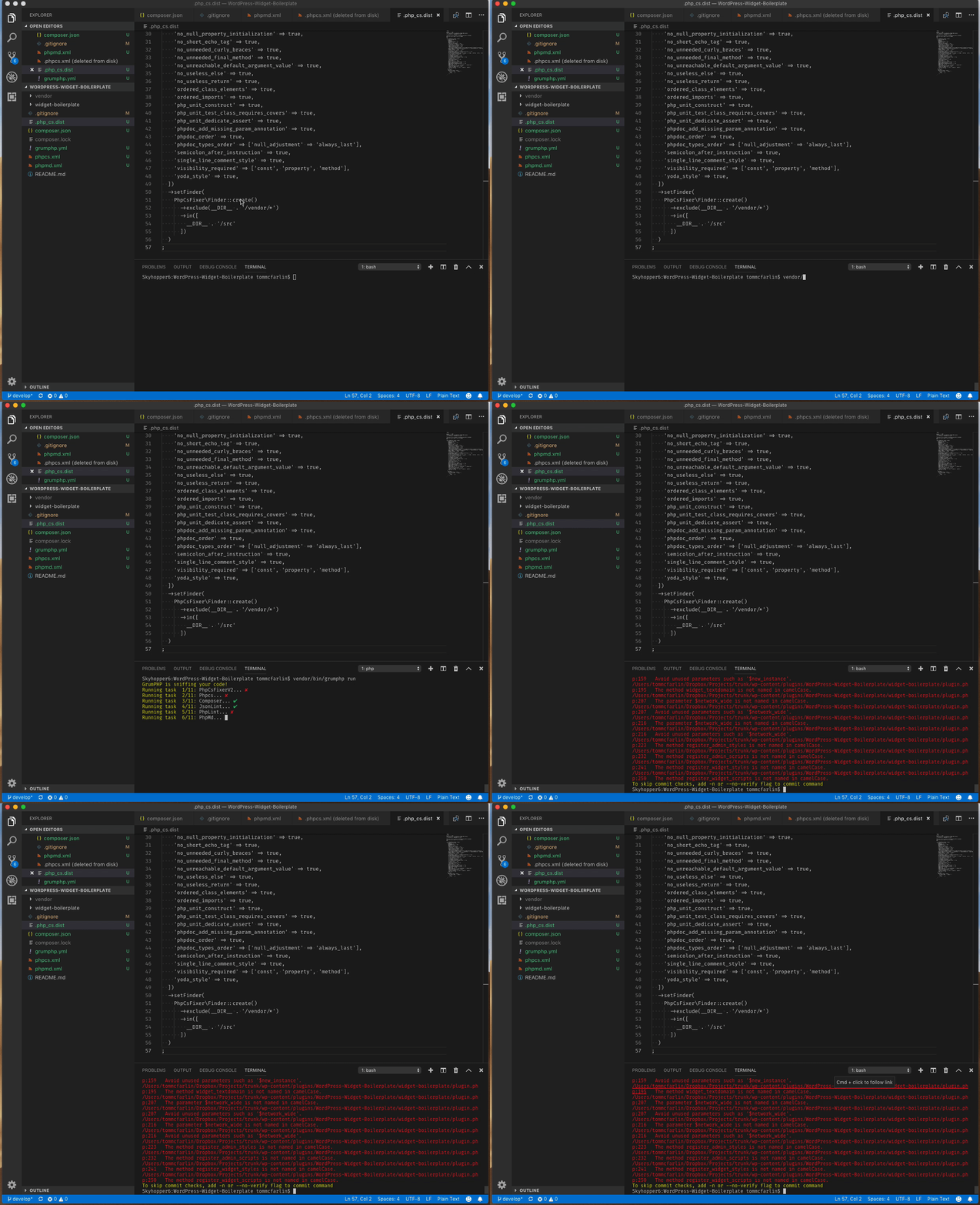
Screen Capture on 2018-11-20 at 12-50-27.gif

For now, though, let’s take a look at the errors the code sniffer is throwing and see if we can’t bring it up to more modern standards.

Continue reading

Quick Tip: Optimizing Loading Assets in WordPress

Whenever I think of assets in WordPress, I generally think of JavaScript files and stylesheets; however, I know that fonts and images can also count, too.

One of the things that are all too common, though, especially as it relates to the administrative area, is loading assets in WordPress on screens where they aren’t needed.

It’s completely possible to make an argument that given the file sizes or the functionality that each present, the files are only impacting a minimal amount of load time at best, right?

But match this mentality with who-knows-how-many plugins, and you’ve got more than a heavy impact happening on a given payload.

So what can we do?

Continue reading

WordPress Widgets: Refactoring, Part 1

The last post included a lot of information on setting up code quality tools in your WordPress development environment, but they are necessary if we are going to be doing a lot of refactoring.

But as I mentioned at the start of this post, laying code quality tools first provides us with a foundation we can use as we refactor the boilerplate (which we clearly need to do given the amount of red shown by GrumPHP).

Honestly, I see these as necessary if you’re going to be doing any type of development hence the need to show how to set them up.

Regardless, the previous post shows just how much work we have cut out for us, right?

Screen Capture on 2018-11-20 at 12-50-27.gif

Now we’re going to start with refactoring the WordPress Widget Boilerplate.

This will not only improve the code quality but also walk us through some object-oriented principles that we can apply when building our widgets and we can apply in future WordPress development efforts.

Continue reading

A Helper Function for Admin Notices

If you’re in the business of building plugins, or even themes for that matter, and are incorporating object-oriented practices into your work then you’re likely faced with serialization of some type. And one of the aspects of serialization that it requires some type of feedback for the user.

This can be a success message, a failure message, or a message simply warning the user that some went wrong or perhaps something should be updated.

Whatever the case, WordPress provides all of the facilities that we need; however, we can make it even easier on ourselves by writing a helper function for admin notices. It’s simple, too.

Continue reading

« Older posts Newer posts »

© 2026 Tom McFarlin

Theme by Anders NorenUp ↑