Software Engineering in WordPress, PHP, and Backend Development

Tag: WordPress (Page 73 of 219)

Articles, tips, and resources for WordPress-based development.

Control Activation of a WooCommerce Extension

When creating a WooCommerce extension, it’s important to consider that when the extension is activated, the user may not have WooCommerce installed or active.

And though an extension might activate, it won’t do anything. This can ultimately provide a level of confusion for the user.

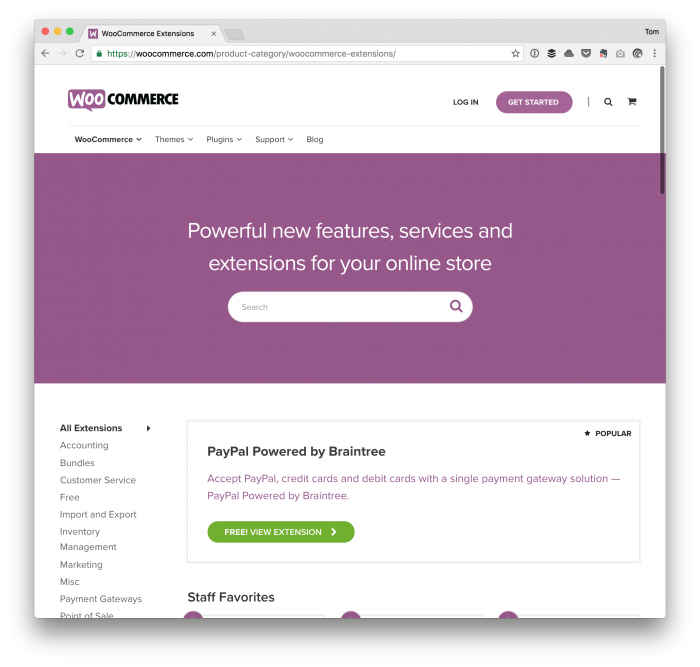
WooCommerce Extension

In cases like this, I think it’s important to make sure an extension can only be activated if the core plugin is installed and active.

Continue reading

PHP Autoloading: Object-Oriented Programming

PHP autoloading is a topic that, once you’ve begun to employ it in your projects, is hard to avoid doing so in any project moving forward.

The challenge with learning how to do it, though, is learning aspects of object-oriented programming and what facilities the PHP standard library has to offer. On top of that, there are other advanced tools like Composer that make it possible, as well.

You have to walk before you can run, as they say, so in a recent series on Tuts+, I walk through how to perform PHP autoloading using object-oriented programming in the context of WordPress.

Continue reading

WordPress Payments: Plasso, Array, EDD, or What?

Years ago, I started using this little service called Spacebox (and I briefly mentioned it about three years ago) to accept one-off payments from clients, family, and friends for different things.

Not long after that, Spacebox changed its name to Plasso, expanded its offering regarding what could be done with it, and I continued to use it for one-off payments.

Fast-forward to yesterday and the company comes out of the gate swinging with some different products for WordPress payments. These include a couple of themes, a plugin, and so on.

And I’m pretty stoked to see what all it has to offer especially with dealing with accepting self-hosted payments (well, as far as accepting things within the context of WordPress).

Continue reading

Plans for 2017: WordPress, React, Pressware, and More

This is that time of year where people do all kinds of posts – from retrospectives to upcoming plans, from taking a break to writing more than they have all year.

Honestly, I’m a fan of reading it all.

And though I don’t normally do a retrospective post (though I’m thinking of going back and following-up on the developer fitness post from last year), I do have plans for what I’m aiming to do come the new year regarding general stuff online so I thought now would be the usual time to do that.

For starters, I’m going to move on from WordPress. Peace out. It’s been great, but it’s time to move on to new things! ✌️

That’s not true at all. There are some new things I’m looking to introduce, though.

Continue reading

WooCommerce Menu, Part 2: A WooCommerce Page

In the previous post, I walked through the process of adding a custom WooCommerce menu to the My Accounts page. It’s straightforward enough, but if you’re creating a custom menu item, then you’re likely going to need a custom WooCommerce page.

That is, you’re going to want to have a page that corresponds to the menu item so that people who are logged into your store can view something related to the custom menu item that’s been added.

Adding a Custom WooCommerce Page

Granted this isn’t always the case, but if you’re adding a custom menu, the odds are you’re going to be adding a custom WooCommerce page. The thing is, WooCommerce expects these pages – which are actually templates – to reside in a specific location.

And if you’re distributing a plugin for others to use, making sure the template is in the right place should be done programmatically.

Continue reading

« Older posts Newer posts »

© 2025 Tom McFarlin

Theme by Anders NorenUp ↑