Tom McFarlin

Software Engineering in Web Development, Backend Services, and More

Page 143 of 429

WordPress Program Architecture on Paper

When it comes to talking about program architecture and terms like that, it always sounds a little bit like we’re taking something a little bit more seriously than it deserves.

This is a bit of a digression of my personal opinion, but I thought it worth sharing before getting into the actual post. Skip to the next heading if you feel so inclined.

When I think of architecture, I think of buildings and vehicles and various other things that, you know, keep humans use to live, to move, to stay alive, and so on. When someone says “architecture,” computer programs are not something that comes to mind.

Secondly, in the last decade or say, there has been this cultural shift in the programming community where compiled languages are “real” programs and anything that’s interpreted or that runs on some type of virtual machine is a script or isn’t a “real” program.

But as far as “architecture” is concerned:

the complex or carefully designed structure of something.

And as far as a “program” is concerned:

provide (a computer or other machine) with coded instructions for the automatic performance of a particular task.

So talking about program architecture isn’t inaccurate at all. It can feel a little weird, I guess, and I don’t know why, but that’s my digression.

But let me bring all of this rambling back around to WordPress.
Continue reading

WordPress Menu Page (And Submenu Pages, Too!)

A WordPress menu page is something that’s easy to introduce thanks to API functions like add_menu_page. On top of that, it’s easy to add submenus using add_submenu_page.

But if you’re working with the plugins_loaded hook or a plugin bootstrap file, then trying to introduce a WordPress menu page (along with any related submenus), you may end up with some unexpected results.

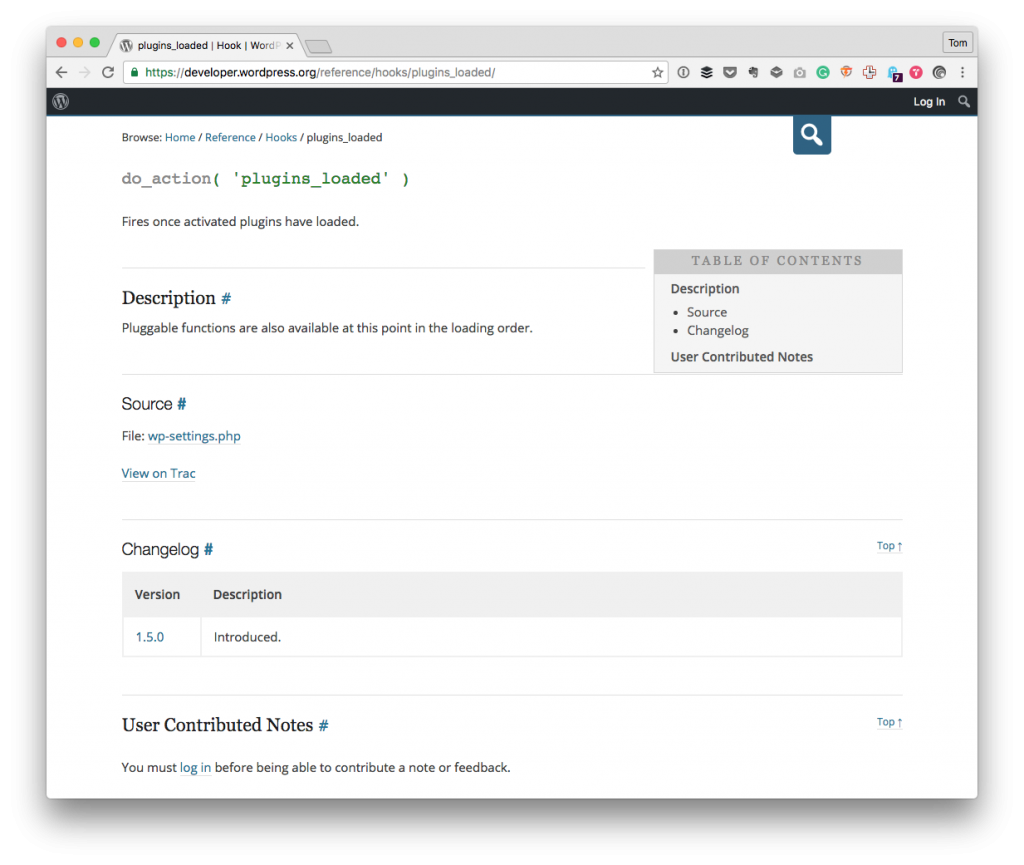
Custom WordPress Menu Page: A reference to plugins_loaded.

The plugins_loaded documentation in the code reference.

Specifically, you may find that your menu and submenus display fine, but they don’t work when you click on them to navigate to the relative page.

Continue reading

Development Tools for WordPress: The Industry’s Ego

Development tools are easy to come by these days. In fact, I think it’s harder to choose what to use than anything else. Never before have we had so many choices especially when it comes to the web.

Development Tools: Programming Languages

Just some of the popular programming languages, let alone tools.

Yesterday, I talked a bit about how there’s a particular breed of developers who love to get on their soapboxes and talk all about their superiority because of the development tools they use. If you haven’t read it, you can, but it’s not necessary for this post.

However, I will state that this is Part 2 of what I wrote yesterday. I even said:

Originally, I had this written as a single post, but it got a little long, so I’ve opted to split it into two pieces.

And I know: Yesterday was less about development and more of a critique of the nature of our industry. I try not to write too much about that, but there are times for exceptions. That was a time.

This one is not.

Continue reading

Software Development Soapboxes: The Industry’s Ego

Software development soapboxes is a term that I use to describe whenever anyone tries to posit themselves as a superior developer because they use different tools than you.

Software Development Soapboxes

Why, yes, my pipe is superior. Please hush and allow me to explain why.

For example, I just talked about my return to MAMP. It’s an option that we have, clearly.

Vagrant, Trellis, VVV, and other options are popular when it comes to building advanced solutions on WordPress. So when I wrote about my move back to MAMP, I expected some pushback or some argument(s), though I didn’t get any.

Perhaps no one cares, perhaps I’m writing into a void, perhaps everyone agrees with me (which is likely the case 😇), or perhaps it’s not worth talking about it.

I’m kidding, of course. Instead, I did receive one tweet that resulted in a great conversation. And I mean that non-sarcastically.

@fgacv asked:

And I think it’s a fair question especially because anyone who writes software in WordPress is likely to come across these (among many other) solutions, possibly evaluate them, and then find the one they like most.

Continue reading

MAMP 4 For WordPress Development

MAMP 4 was released recently, though, at the time, I was busy experimenting with Pressmatic. I think Pressmatic is a strong piece of software, though, for my day-to-day workflow, it doesn’t fully suit my needs.

So I returned to MAMP, and I’ve been thoroughly pleased with MAMP 4.

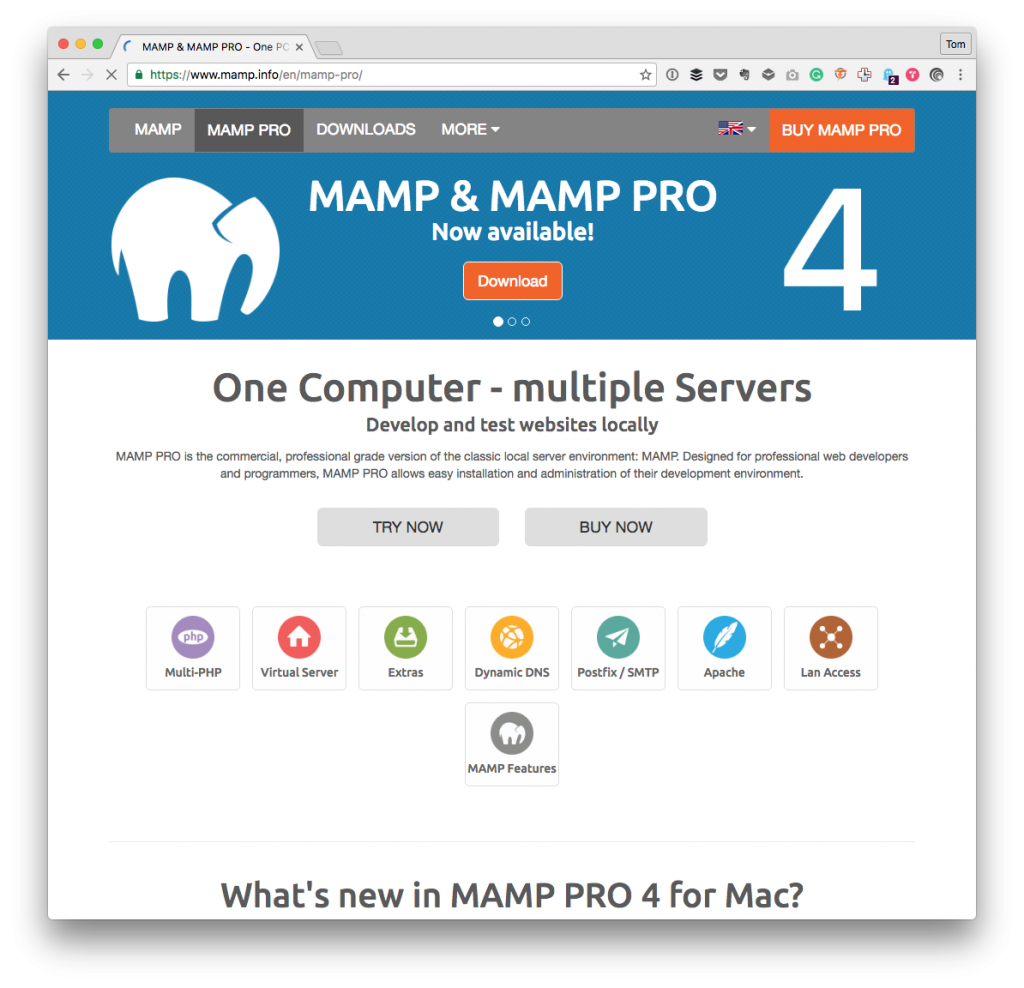
MAMP 4 Homepage

No, it doesn’t use a lot of the same technology some other applications do (such as virtual machines), but I’ve not found that to hinder the work I’m doing.

Continue reading

« Older posts Newer posts »

© 2026 Tom McFarlin

Theme by Anders NorenUp ↑