Software Engineering in Web Development, Backend Services, and More

Author: Tom (Page 140 of 430)

Append WordPress Page Content From the Database

When we – or the people for whom we’re working – create WordPress page content, it’s usually through the editor or maybe through some other client front-end that we’ve created.

But what about the case where there’s something specified using a custom settings page that controls the content displayed on a specific page?

This is getting into custom implementation territory so let me try to give a bit more context to this whole situation.

Continue reading

Sharing Code: A Good Opportunity To Exchange Ideas

In the previous post, I happened to share a screenshot of some source code that was from a 0.1.0 (or, perhaps more appropriately named, an MVP) of a project I’m writing (and it turned out to be a good opportunity to exchange ideas with someone else).
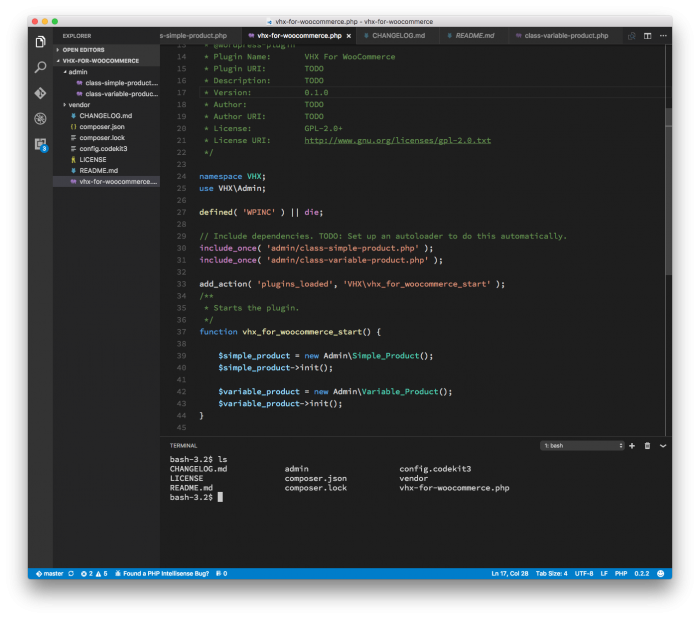
Exchange ideas based on your source code.

Not long after it had gone live, I received a tweet containing the following comment:

Interesting to see how differently people work. There at least four things in your screenshot that I wouldn’t do.

From experience and from being online long enough, I know there are certain segments of our industry who look at something like this and think “Burn – he’s got it down and he’s going to take him to school.

Except not really.

I believe I’ve talked about this in previous posts, but what I’m getting at is when others make comments like this to you, approach it in two ways:

  1. Understand they are coming from a place of [likely more] experience,
  2. Ask what things they would do differently. Odds are they have good reasons and are likely in a position to help you get better at what you’re doing.

Later in the post, I’ll share the entire conversation that took place on Twitter but I think it’s important to mention that, at this point in time, I know the person in question well enough to have both respect and no problem in engaging them in further questions and conversations about things like this.

But it hasn’t always been that way. So for those of you who are getting into sharing your code and learning how to field feedback that comes regardless of the format, then this is primarily for you.

Continue reading

Custom Plugins: What’s Loaded, What’s at the Ready?

The longer I work in building custom plugins for other people, the more I’m convinced of the advantages of maintaining a personal library of classes (or functions depending on your style) that help expedite tasks that are common to every project.

Sure, it can be hard to determine what you’ll require for every project and what you’ll require for some projects.

Custom Plugins and Required Files

And there’s nothing wrong with focusing specifically on the latter, but there are advantages that you have, at the bare minimum, a foundation off of which you can build custom plugins for others without constantly re-writing the same code over and over and over.

And over.

And you get it.

So what are the things that we should have and what are the things we should save, say, at the ready?

Continue reading

Intuition, Laziness, Discipline, and Experience

When I sat down to write this post, I didn’t have an idea as to convey what I wanted to say. (And that’s a ridiculous thing to feel when you’re writing. )

Honestly, I just had a single sentence that I’d jotted down a few days ago and was going to flesh out in more detail.

Developer Intuition

I wrote:

You begin to develop a sense of intuition for how something should be designed or implemented.

It’s not even really a fully developed thought. It’s just a statement (and I’m not even sure it’s a good one) that I was going to explain in more detail. But then I stumbled across this post and found this statement:

I’ve become a big fan of the “do less & be lazy” approach to building things.

And though the post is about the performance of pages using web fonts, it’s still related to what I want to convey.

All that to say I didn’t have a post, just a statement, and I needed an opener. In reading another post, I found it in the quote above.

Continue reading

Using Configuration Files for Class Properties

The idea of using some type of configuration files for a project isn’t anything new. Nor is the idea of using a format such as JSON.

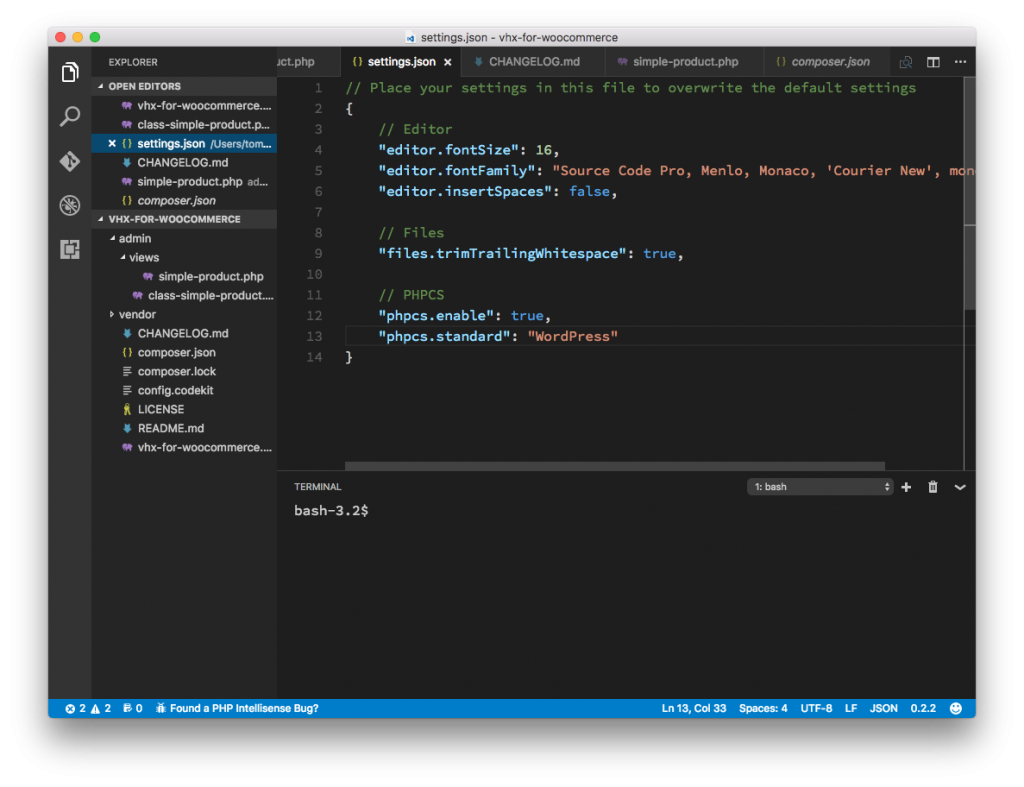
Look in any directory for a number of major applications that you use, be it a source control manager, IDE, a build tool, et al., and you’re likely to find some type of configuration file. (And when it comes to build tools, many of us already write configuration files using JSON specifically to tell the build tool information about our project.)

Configuration Files as seen in VS Code.

Configuration Files as seen in VS Code.

Yesterday, I shared some of the challenges that can come with creatively solving problems and said that I was going to talk about something I’ve been working on:

With all of that said, it wouldn’t be particularly honest of me if I didn’t discuss and share my code, though, would it?

So that’s the purpose of this post: To talk about one way that I’ve been looking to solve a problem in a project on which I’m working.

Continue reading

« Older posts Newer posts »

© 2026 Tom McFarlin

Theme by Anders NorenUp ↑