Software Engineering in Web Development, Backend Services, and More

Author: Tom (Page 121 of 435)

There’s No Perfect Size for a Feedback Loop

The more I drafted this post, the more it felt like I should be writing some type of TL;DR for certain people who read this. So, in an effort to save time, here it is:

I’m writing this for those who are new to self-employment, project management, or generally have less experience than those who are asking “Why are you writing this?” Ultimately, it’s something that most of us learn at some point in this industry, but if we can help one another short cut it sooner rather than later, we all benefit.

If you’re still interested after reading the note above, then I assume you’re looking to get better at this aspect of communication. Which is good, because so am I 😏, and using a small feedback loop is one way in which I’ve found to do that.


Every industry has a bit of their own jargon and many of us laugh about it, yet we all continue to use it when in a professional setting. We’re funny that way.

Anyway, in our industry, one of the phrases that we use a lot – myself included – is “feedback loop.” The first time I ever came across the phrase was with regard to feedback from amplifiers. It had nothing to do with software. Nonetheless, in what we do we generally use it to refer to it as:

  • sending a request, comment, or general piece of information to a customer,
  • receiving a response from the customer regarding said information.

And for those who aren’t used to the idea (because there are those who do “big bang releases” which I’ll talk about in a minute), feedback loops are usually considered to be small or large.

The longer I’ve worked in software, the more I always aim for A small feedback loop no matter what.
Continue reading

The WordPress Economy, Employment, Strategies, and More with WP-Tonic

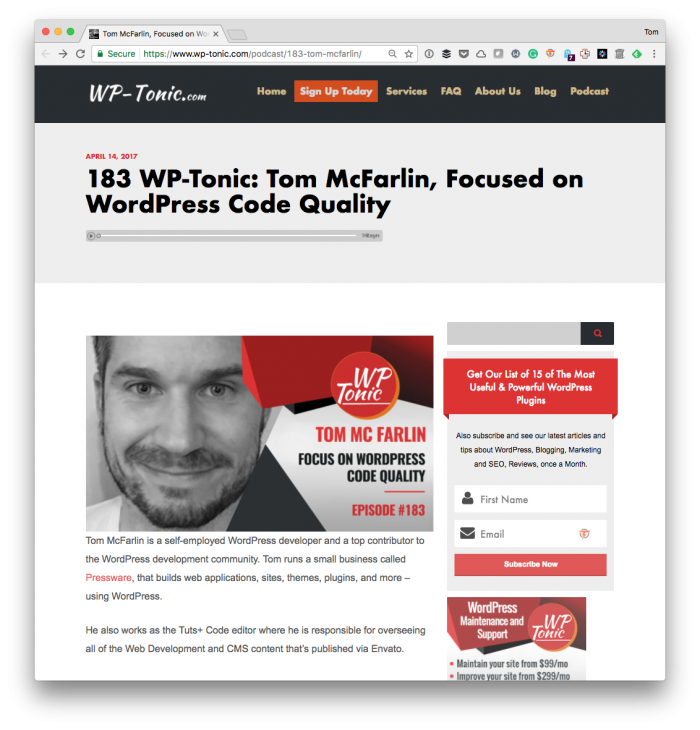
Last week, I had the pleasure of talking with John Locke and Jonathan Denwood on WP-Tonic to talk about a variety of things regarding the WordPress economy, self-employment, development strategies, observations around the software, along with a variety of other topics.

The WordPress Economy, Employment, Development, and More

Before covering what it is that we covered, I do recommend checking out their library of podcasts.

They’ve talked to people who I think are worth a follow and who are far smarter, accomplished, and have unique insight on a variety of topics in the WordPress space.

Continue reading

On Writing Clever Code with Arrays in WordPress

I don’t know if there’s a standard for what’s considered “clever code,” but I think that if you were to show various code samples to programmers, they’d be able to know it when they see it.

And there used to be a time in my career that I was far interested in writing clever code. But the older I get and the more work I do in maintaining projects, the less concerned I am about writing clever code and the more interested I am in writing code that’s clear and read and thus maintain.

Clever Code with Arrays

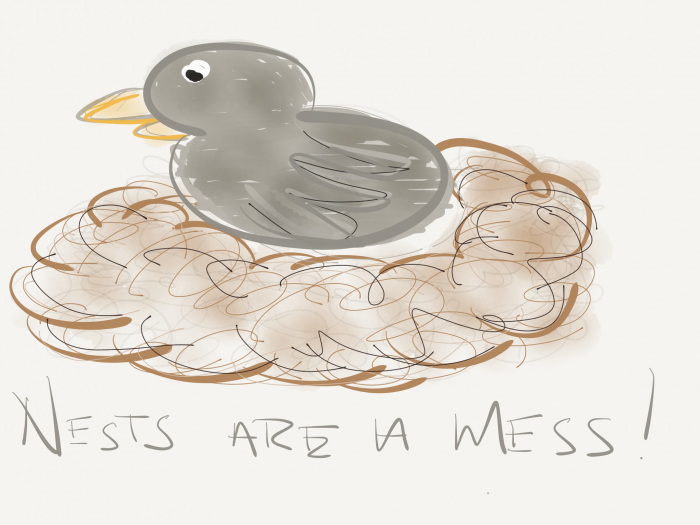
Clever code is for the birds. Pardon these stupid puns.

When we work with WordPress, we’re likely dealing with arrays a lot especially given that so much of the internals of WordPress are built on them (yes, there are some objects too, but arrays are pervasive).

What, then, does clever code with arrays look like in WordPress versus less clever code? And furthermore, should we avoid aiming to write clever code?

Continue reading

Registering WordPress Hooks Using Another Class

In yesterday’s post, I talked about a WordPress plugin constructors and the rationale as to why hooks shouldn’t be in the constructor.

Though I mentioned a number of ways to handle hook registration, I didn’t bother to go into details for each of those strategies. As far as I’m concerned, they are deserving of their own article in order to provide as much detail as possible for how to set something up.

For example, one of the methods I shared stated:

  • It’s possible to create a class that maintains a registry of objects and the hooks with WordPress.

In other words, it’s about registering WordPress hooks using an object-oriented approach to decrease coupling and increase cohesion among the components in the plugin.

But what does that even mean? What are the advantage does it bring, how is it setup, and how it used?

Continue reading

WordPress Plugin Constructors Shouldn’t Define Hooks

WordPress plugin constructors seem to be more and more a topic of debate when it comes to what they should define. I’ve talked about it before but it’s okay to revisit a topic like this from time-to-time, right?

After all, there are things we learn and things that we change as we gain more experience.

It’s not at all uncommon to see plugins defining hooks and other behavior, but I’m not a fan of this approach. Instead, I think handling hook registration should be done in its own function or, even more drastically, handled by a set of classes.

But before getting into that, I want to explain what should go in a WordPress plugin constructor, why it should go in a constructor, and how this can be handled when working on your plugins.

Continue reading

« Older posts Newer posts »

© 2026 Tom McFarlin

Theme by Anders Noren — Up ↑