Software Engineering in Web Development, Backend Services, and More

Category: Notes (Page 23 of 50)

Notes on programming-related problems that I’ve encountered while working on various projects.

Upload Files to the WordPress Media Library

Programmatically uploading files to WordPress is really just the same as uploading files from any source location to a destination.

That is to say, there are a number of PHP functions all of which make it pretty easy to deal with file-level operations, grabbing files from one location, and moving them to the next.

And yes, there are some nuances that can come with PHP’s configuration such that you may not be able to write to certain directories, perform certain options via HTTP, and so on. All of these can be managed by either changing up the configuration or by changing the way in which files are handled by the code.
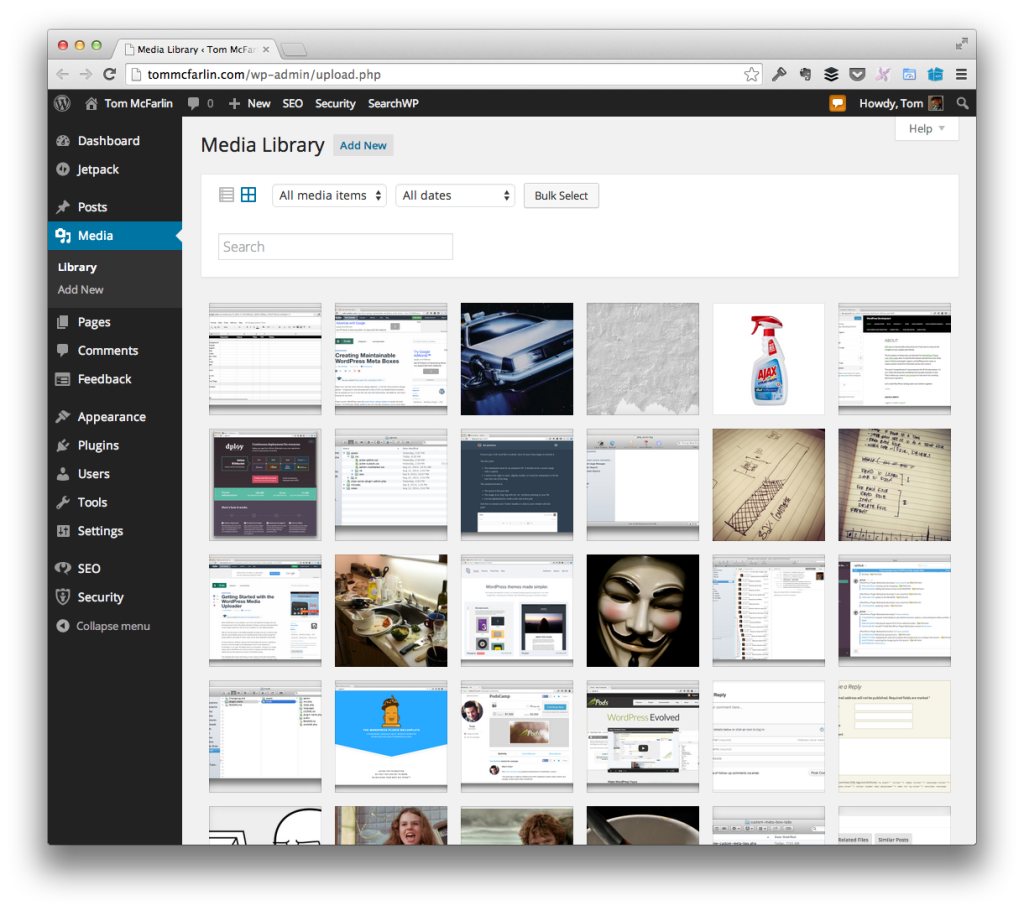
The WordPress Media Library

One thing that WordPress offers that manual uploads don’t manage is adding files – specifically media types – to the Media Library after uploading a file. This is relatively easy to do given media_sideload_image.

But let’s say the situation is a little more complex.

Continue reading

Programmatically Add Multiple Post Terms in WordPress

A couple of weeks ago, I shared a simple gist for how to programmatically add post terms in WordPress. If you’ve read the series on importing CSV files into WordPress, then you’re likely to encounter something like the following scenario:

Given a CSV, apply multiple terms to a single post when the terms are delimited by another character.

So, for example, let’s say that you have a CSV and each value is, naturally, separated by a comma. Within one of the columns, words – or terms, in our case – are delimited by semicolons. Each value that precedes a semicolon represents a term (related to any given taxonomy in the system – this is irrelevant for this particular post).

Adding multiple terms to a post, or post type, is relatively simple and can be based off the functionality already shared.

Continue reading

Programmatically Add Post Terms in WordPress

Importing CSV files (or something similar) is something that’s nothing new to web development.

If you’re writing a server-side code that’s responsible for importing a file in the context of WordPress, then you can be doing anything from programmatically creating posts to creating more complex relationships among post types, taxonomies, and so on.

In this case, it’s nice to have an abstract function that can help to do a lot of the repetitive work for you. After all, aren’t functions specifically for that?

Continue reading

Adding Plugin Config Files to WordPress

Almost everyone who has worked with WordPress has dealt with wp-config.php. I know – there are a lot of managed hosts out there that take care of a lot of this for you – but even though a person may not have directly edited the file, they have definitely interacted with it.

For those who are unfamiliar:

This file is located in the root of your WordPress file directory and contains your website’s base configuration details, such as database connection information.

Anyway, for sometime now, I’ve been working on a relatively large plugin for a client and have recently taken to introducing a similar type of configuration files. So this raised that question, do what you think of plugin config files?

Continue reading

Tips for Saving and Retrieving Post Meta Data

One of the common things that I’ve seen – and personally done – is mismanaging $_POST data as it comes into the server-side from a form or some type of input element from the front-end. This may be in the case of sending data via Ajax or by doing a standard page refresh.

Chill Out, Veruca. We're getting there.

Chill Out, Veruca. We’re getting there.

Whatever the case, whenever you’re dealing with $_POST data in WordPress and you’re looking to save information into the database, there may be times where you’re interested in saving empty values, and there maybe times where you’re interested in savings values only if they are not empty.

If you’re going after the latter, there are a couple of safe guards you should introduce in your code to make sure that rows are only being written when there’s data to actually be written.

Continue reading

« Older posts Newer posts »

© 2026 Tom McFarlin

Theme by Anders NorenUp ↑