When you look around the world – both online and offline – it appears as if the world is beginning to value simplicity more than it has in a very long time.
By this, I mean that the way that things are designed: From billboards or magazine covers, to the minimalistic approach of interior decorating, all the way down to the interfaces on our phone. On top of that, I think that we’re collectively beginning to understand that simplicity is not necessarily an antonym for complexity – instead, it’s a way that functionality can be achieved such that it’s easy for the consumer.
Complex operations happen all of the time through the use of simple actions. Think about what happens when you turn the key to your car, press the power button on your computer, and so on.
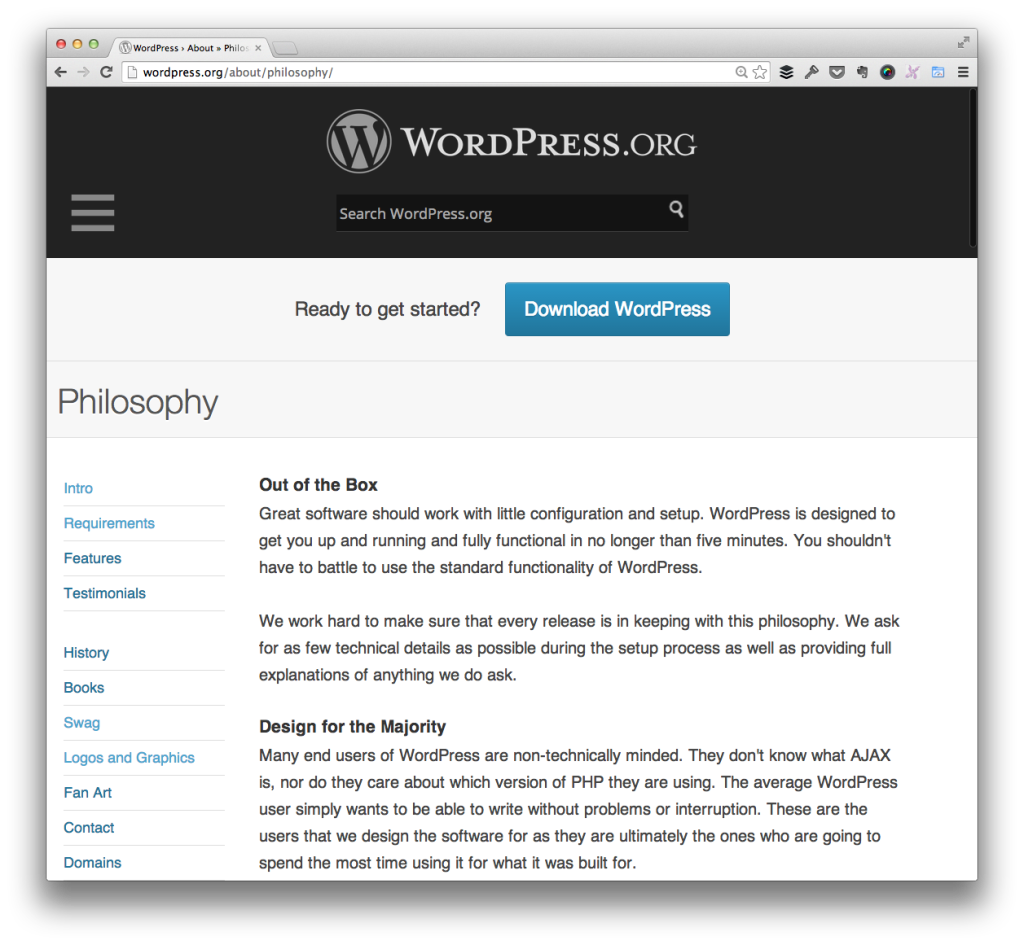
The neat thing is that WordPress values simplicity to the point that it’s included within its very philosophy. And for the past few articles, I’ve been writing about the WordPress philosophy and how we – as people who help to drive the WordPress economy – are disrespecting the philosophy.

I want us to turn that around.
First, if you’re just catching up, be sure to read the previous articles in the series:
With that said, let’s talk about simplicity.