Software Engineering in WordPress, PHP, and Backend Development

Category: Articles (Page 231 of 258)

Personal opinions and how-to’s that I’ve written both here and as contributions to other blogs.

Don’t Copy WordPress Plugins

The conversation about the ethics of what it means to copy WordPress plugins, theme, applications, and more isn’t new. In fact, just the other day, I was having a conversation with a friend of mine about what competition looks like in various marketplaces.

Based on my conversation with him (and a number of others, for what it’s worth), there tends to be two schools of thought on releasing products into a marketplace that can be summed up in the following two statements:

  • If a similar product already exists, don’t do it.
  • If a similar product already exists, do it.

Sure, that’s an oversimplification of the idea and there’s a lot to be said about both; however, I’ve seen this same thing discussed in the context of both WordPress theme and plugin development.

Specifically, the quote I read was as follows:

1. Check the plugin repository to see if similar plugin exists.

2. If so, don’t reinvent the wheel.

Initially, I categorically disagreed with this perspective. Continue reading

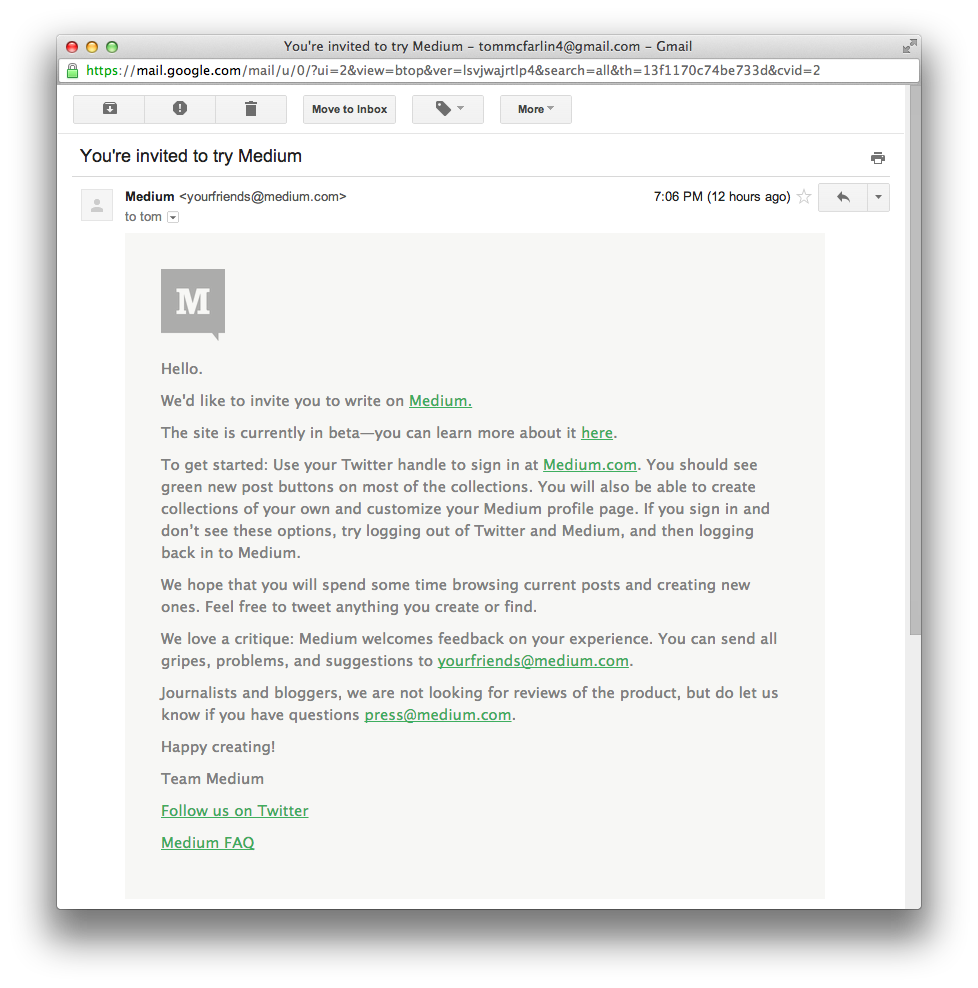
The Tension of Writing on Medium

Of all of the various blogging and/or digital publishing platforms that are available, the one that has intrigued me the most has been Medium.

Last night, I received an invite (though I’ve yet to write my first post), but there are already points of tension that I feel when it comes to writing on Medium.

Writing on Medium

Before I actually get into that, I actually really dig what they are doing with comments, authenticating with Twitter (one less login!), collections, and so on.

But here’s the thing: I feel as if the service looks so good that it invites only the best content that I – or anyone – can write before actually hitting publish.

There’s a lot wrapped up in that.

Continue reading

An Introduction To The WordPress PHP Coding Standards

Comments on are closed on this post so we can keep the discussion on the original articles.

I’ve written several times about the importance of coding standards in both development in general, as well as it relates to WordPress. In short, I think that coding standards are often overlooked but can help contribute so much to improving the quality of the code that we write for ourselves, for the overall economy, and for future contributors.

I’ve recently completed an eight part series for WPTuts+ that provides an in-depth look at the WordPress PHP Coding Standards. Throughout the series, I look at each aspect of the coding standards, tease out the significance of why they are the way that they are, and how to make sure that you’re properly applying them in your work.

Continue reading

On Being a Pragmatic Developer

Late last week, I received an email from a fellow developer asking me if I had any thoughts on the pros and cons of using Vagrant versus Apache in in WordPress development.

At one point in my career, I would have spent extensive amount of time researching both, reading articles, and even testing out the two pieces of software along side one another because I didn’t want to respond with an “I don’t know.”

Years ago, I got over that attitude – in fact, I don’t think it’s possible to keep that mentality up and actually advance your career – but I responded with the following:

So I haven’t really done much with Vagrant, at least not right now. I’m hoping to eventually tinker around with it but I tend to work with things on a need-to-know basis so I pick them up as I go along.

Right now, my current projects are on the typical stack so I’ve yet to really need to pick up Vagrant or have the time to spend tinkering with it.

Wish I had more to offer, but that’s all I’ve got for you right now :).

It’s okay to say I don’t know, but that isn’t an excuse for laziness. I think that it’s important for developers to balance pragmatism with laziness when dealing with new technologies.

A New Version of WordPress Plugin Support

I’ve written at length about the dilemma of supporting WordPress plugins and looking at various support systems both of which generated some good discussion on offering WordPress plugin support.

Over the past few months, I’ve been [slowly] mapping out exactly where I want to take the direction of the work that I do on plugins (as well as other projects), and how I want to offer support.

Last week, I took the first step and began directing all of the support requests for my current plugins into my inbox.

Continue reading

« Older posts Newer posts »

© 2026 Tom McFarlin

Theme by Anders NorenUp ↑